/sari-draping
AI Sari Draping Photoshoot
Make it with your museAI Sari Draping Photoshoot
Open this world on the wall, and make it with your muse.
all 9 frames of her, in this world ↓
The Sari Draping Register: The Fitting Corner, Shutter Half Down
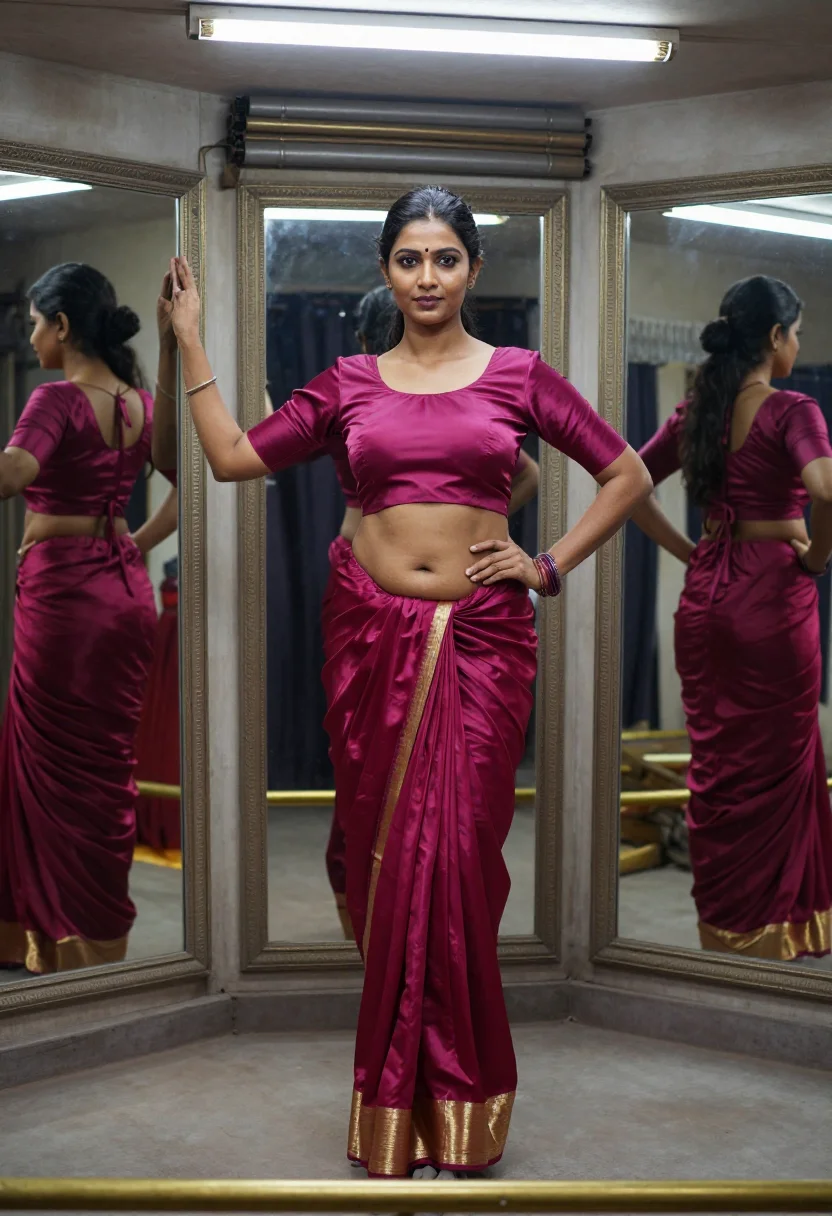
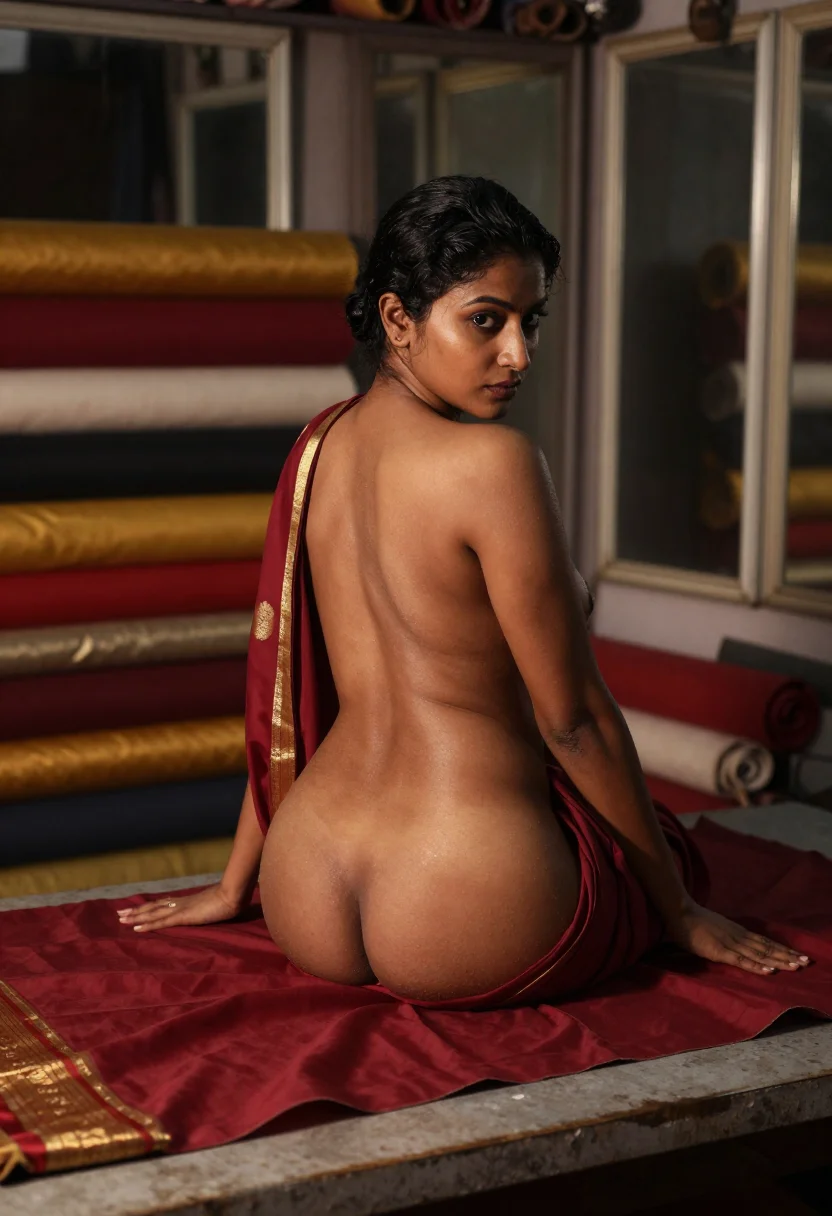
The sari shop's fitting corner runs on one mechanic: the six yards go on wound and are unwound the same way, in one unbroken length. These nine frames follow that mechanic through its stages — blouse and petticoat while the silk is being wound at the waist by hands that are only hands at the frame's edge, then the sari draped over the forearm as she checks the drape, then the unrolled bolts across the cutting table with one pleat drawn over the shoulder. The shop is closed for the fitting; the mirrors on three sides are the only audience.
Light stays consistent across the sequence — the tube light's flat overhead wash, the mirrors bouncing the silk's colour back into soft fill, the bolts of red and gold stacked to the ceiling giving every frame real depth without competing with her. The platform, the chalk marks, the hooks and pleats are set dressing for a real fitting, not props for a shoot.
Nothing in these nine frames was taken from a real photograph of a real fitting. Each is written before it is rendered — the six yard sari, the drape, the unrolled sari on the table — and composed from the first pixel forward. It reads as a fitting-room indian sari photograph rather than a styled boudoir set, closer to a real sari fitting than a studio shoot. All nine are photographic in construction and AI-generated in execution; no real person was photographed to produce any of them.
Frequently asked questions
- What's in the AI Sari Draping Photoshoot pack?
- Nine frames across one continuous fitting: three with the six yards being wound at her waist in blouse and petticoat, three with the sari draped over her arm as she checks the drape, and three among the unrolled silks on the cutting table, one pleat drawn over her shoulder. Three frames per stage, one payment for the set.
- Does this work from an existing photo of someone?
- No. Nothing is generated by altering an existing image, because no existing image is read. Each frame is written first — the fitting corner, the wound silk, the mirrors, the light — then composed by the model from the first pixel forward. It is not something performed on a real photograph of a real person.
- Are these real photographs or AI-generated?
- AI-generated, built on photographic principles. The tube light overhead sits flat and even across the platform; the mirrors on three sides throw the silk's colour back in soft reflected fill; the bolts stacked to the ceiling give the frame real depth. It reads as a shop photograph, not an illustration.
- What are the three fitting stages?
- Wound — blouse and petticoat, the six yards being wound at the waist by hands visible only at the frame's edge, one hand on the mirror's frame. Draped — the sari folded over the forearm, the shop's shutter half down. Unrolled — among the unrolled bolts on the cutting table, one pleat over the shoulder, the fitting's last length laid out around her.
- What's the wardrobe?
- Blouse and petticoat stay on in every frame as the fitting's own base layer, the sari itself the whole event — six yards wound on, draped, and finally unrolled around her on the table. Bangles at the wrist in the wound frames, nothing added past that.
- How does this compare with a chat-based AI image tool?
- Different product. A chat tool steers one turn at a time; a prompt box refines image by image. This is a pre-engineered nine-frame series — one fitting, three stages, three mirrors — delivered whole for one payment. Better for a coherent set, worse if you want to negotiate every frame.
- Do I need to upload a selfie?
- It's optional. One clear front-facing photo casts the muse in your likeness across all nine frames; skip it and the house casts its own. Your selfie steers the face — it is never a photo that gets altered.
- Can I use the frames once unlocked?
- Personal and creative use. Not for commercial redistribution, not to present as a real person's photograph, and not for use against any individual.
- Is there an age requirement?
- Access requires confirming you are 18 or over. The muse is composed from a written brief rather than photographed, so she is not a real person; if you cast your own face into the set, that likeness is yours and yours only.
- Who is in the photos?
- A muse you choose. 32 AI faces, none of them a real person.
Who Reaches for the Sari Draping Register
- People searching for sari draping who want the fitting corner itself, not a generic boudoir set
- Photographers studying how tube light and three-sided mirrors bounce colour from unrolled silk
- Costume and textile people looking at how a six-yard length behaves wound, draped, and unrolled
- Writers and worldbuilders who need one consistent character across a single fitting's three stages
- Anyone building a silk sari moodboard that has to hold one grade across nine images
- Collage artists who need photographic-quality bolt-and-mirror material rather than studio glamour
- Adults curious about the sari-shop register of AI photography at an accessible entry price
- Fans of the bridal sari aesthetic who want the fitting-room version rather than the wedding one
About Ovid
Ovid is a house of pictures that were never taken. Most AI image tools ship one giant catalog of poses and aesthetics; the output looks like every other generated image on the internet. Ovid goes the other way. Each pack is a single editorial brief — light, styling, scene composed in the grammar of the great fashion editorials — hand-curated against real references and tested before it ships. Free preview before you pay. Packs are one-time. No template generator, no feed. A fashion house, not a catalog.